The mechanism
A thick lawn does the weeding for you
Weeds take hold where grass is thin. Feeding thickens the sward so there is no bare soil for a seedling to land on, which is why feed and weed are sold as one programme rather than two jobs.
A treated lawn crowds weeds out on its own — that is the whole mechanism, and it only works if the timing is right.
when the grass is growing and can take it up
depending on how much weed there is to start with
for a typical domestic lawn
keep children and pets off until then
hand-held and knapsack application
moss is a drainage and shade problem
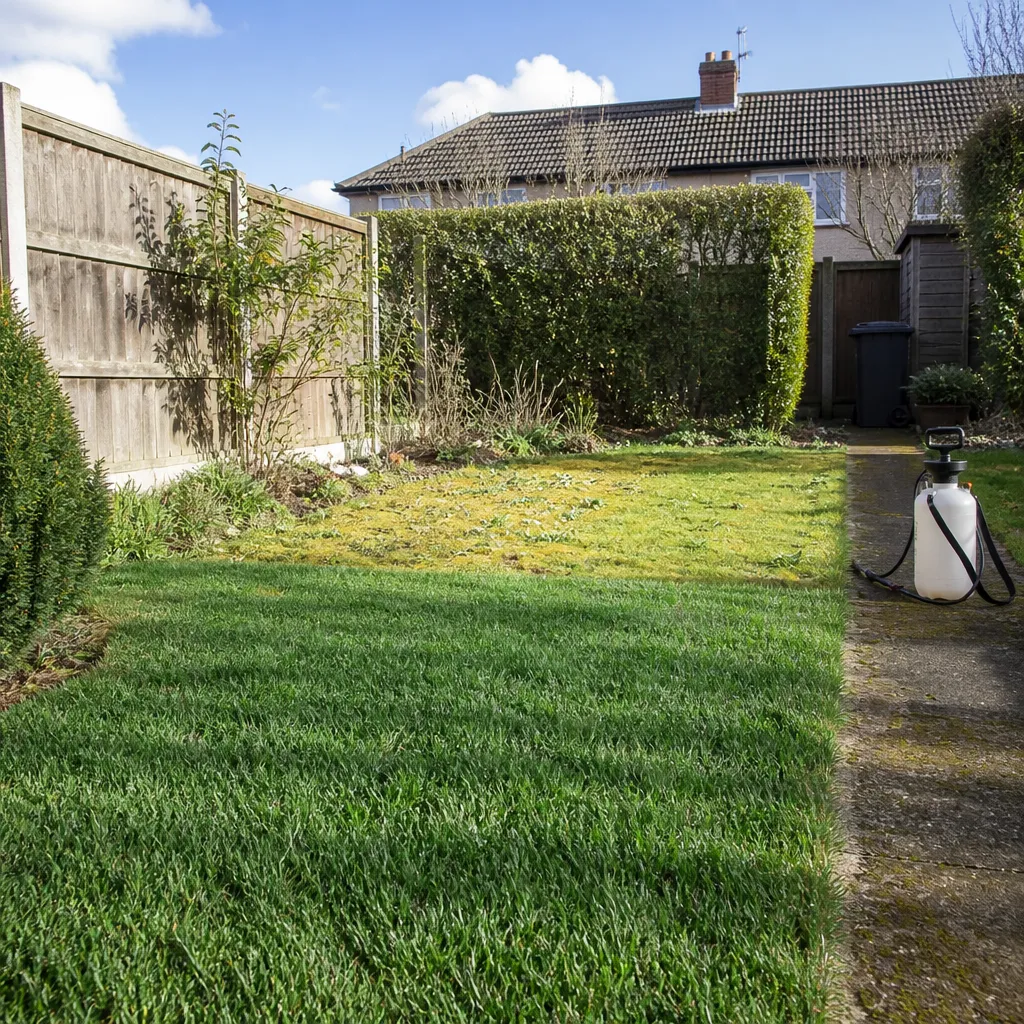
Lawn treatment is a feed and a selective weed control, applied two to four times a year at the points in the season when grass is growing and can use them. The feed thickens the sward so weeds have nowhere to germinate; the herbicide clears what is already there without touching the grass.
The mechanism
Weeds take hold where grass is thin. Feeding thickens the sward so there is no bare soil for a seedling to land on, which is why feed and weed are sold as one programme rather than two jobs.
Why not the shop bottle
A professional selective herbicide kills the broadleaf weed and leaves the grass standing. Applied by knapsack at a calibrated rate rather than poured from a bottle, so the lawn gets an even dose and nothing gets a double one.
Timing is most of it
Selective herbicides are systemic — the plant has to be growing to move the chemical to its roots. Applied in the wrong month the product sits on the leaf and the money is gone, which is the single most common way lawn treatment gets wasted.
The month is only half of it. The product also needs a still, dry day with no rain due for a few hours, on grass that is neither frozen nor drought-stressed — which in a wet autumn can mean waiting a week for the right morning rather than treating on the day we are booked.
Ormskirk sits on the Shirdley Hill Sand, and that one fact decides most lawn problems in the town. Water perches on the clay beneath the sand through winter, so lawns come out of February wet, compacted and mossy; the same profile then dries fast in summer. A lawn on this ground wants feeding at both ends of the season and treating in neither the wettest nor the driest part of it.
It sits alongside the rest of our garden services in Ormskirk, and is often booked with lawn mowing & edging. The ground changes across the patch — see Ormskirk.
We look at what is actually growing — which weeds, how much moss, how thin the grass is, and whether the problem is the lawn or the ground under it.
If the real problem is compaction or shade, treatment alone is a temporary result and we will say so before you spend anything.
A spring or autumn feed appropriate to the season — nitrogen for growth in spring, a root feed in autumn. Applied evenly at a measured rate.
Under an hour
Applied by knapsack to actively growing weeds, on a still day with no rain due, so it stays where it is put and gets absorbed.
Broadleaf weeds take one to three weeks to go. We say what to expect and when a second visit is worth booking.
How it is priced
By lawn area and by how much weed there is to start with. A first treatment on a neglected lawn takes longer than the maintenance visits that follow it. The price you get is the one on your written quote, after we have seen the lawn.
The commonest mistake
Drought-stressed grass will not take a herbicide up and can scorch instead. After August, growth slows enough that the application may simply not work. Both waste the whole visit.
Moss
A mosskiller blackens moss and it comes straight back. On Ormskirk sand the usual causes are winter water perching on the clay underneath, shade, and mowing too short — none of which a chemical addresses.
Acidity
The sandy soils around Ormskirk are described as very acid where they have never been cultivated, and acid ground favours moss over grass. Feed on its own does not correct that.
Rain
A selective herbicide has to stay on the leaf long enough to be absorbed. With 30 wet days in a typical summer here, picking the day matters more than picking the product.
We hold both of the certificates that work requires.
This is the general position, not a decision about your property. We confirm it with the authority named above before we quote.
Dan came and did a day clear up on our garden, he then scarified, fed and seeded our lawn. We then booked him to come back, put down sacking, edging and stones. Dan works hard from start to finish and leaves your garden clean and tidy, taking away debris. My daughter is getting married on Monday so we are having a garden party, we are now party ready! Thank you 😊
Dan was very reliable , efficient and got the job done to a high standard. We are very pleased with our garden.
Highly recommend, pays great attention to detail, with excellent knowledge and skill. Very reliable and will give you a bespoke service tailored to your needs.
Dan was fantastic! My garden was in a bad way and now it looks incredible! Can’t believe how quick he was and what a fab job he’s done, also very reasonable price considering what he was faced with. Would 10/10 recommend.
Booked in with Hardman Horticulture to get on top of a garden that had been somewhat neglected for many months - Dan was able to communicate effectively around availability, provided a fair quote for the work, and turned up when they said they would. Very pleased with the results of the initial visit and have communicated intention to re-book for further garden work. Highly recommend!
Very good at maintaining my gardens and reliable
Tell us roughly what the garden looks like now and we will say what it needs and when.
Rather talk? Call 07848518693
Thanks — that's with us.
We reply the same working day and book visits within five. Your details stay with us.